Okay, the long wait is over. I finally created my new site - Framedshutter. If that somehow didn't work, here's the URL http://www.theframedshutter.blogspot.com/ . Yes, that site is a continuation of this one, so not to worry. One thing to note though, that site isn't 100% photography. Instead, it's going to be a slight mix of photography and I.T. (that includes internet browser tutorials and what not). That's all for now. Happy reading!

Your one stop for reviews, recommendations, tips, techniques and much more.
Tuesday, November 22, 2011


Monday, September 26, 2011
I'm really surprised. And not decided at the same time
Wow. The last time I checked my site, I saw only 5000+ visits. And recently, I just checked it again and I saw like 7000+ visits! Yeah, yeah, for you 'pro' bloggers out there 2000 visits isn't anything.But to me, it's a huge improvement from my previous blog.
UPDATES.
I've been searching around for a proper domain for my blog and my photos. So yeah, it's just basically gonna be something like a link between the two. Anyway, up to now, I still haven't found the right one and same goes to the URL. I've been busy lately with some stuff, so I'll update you guys with the info soon enough!
Friday, May 6, 2011
Moving out :O
To anyone reading this blog right now:
I'll most probably be starting a new Wordpress blog. It just suits me more. I'll be posting the link of the new blog once it's up :) and if you're wondering, it's still gonna be about photography, tech and etc.
I'll most probably be starting a new Wordpress blog. It just suits me more. I'll be posting the link of the new blog once it's up :) and if you're wondering, it's still gonna be about photography, tech and etc.
Himself,
Jeremy AKA framedshutter.
Monday, April 25, 2011
The exposure triangle
A new technique for beginners...
Beginners tend to face problems why getting the right exposure. The shot has the perfect composition, perspective and everything, but unfortunately it's not perfectly exposed. Instead of getting frustrated with your camera and cursing, why not learn this technique called The Exposure Triangle? The concept is simple, tweak any one of them to compensate for the other. But first, let's go through what's in the exposure triangle...The three components in the exposure triangle is:
- ISO
- shutter speed
- aperture
 |
| Exposure Triangle |
The ISO is the sensitivity of the sensor. The higher the ISO, the more sensitive the sensor will be. But, there are drawbacks from this. Noise, a term of the presence for colour pixels where there should be none, will start appearing. Now, DSLRs these days offer the NR feature(Noise Reduction) but do note that this will degrade your picture quality.
Moving on to the shutter speed. Like our eye, we have to blink. Quite similarly, the camera has to do the same to take a shot. Shutter speed means the shutter of which it opens and closes. The shutter speed itself is a very crucial tool depending on what your subject is. If you're after motion, you'll be needing a slower shutter speed like 1/2 second all the way to 10 seconds. If it's sports, then obviously you'll be needing a (very)fast shutter speed like 1/500 second to catch the action.
Lastly, aperture. Aperture is a term for the size of the lens' hole. The bigger the aperture, the more light enters. Other than the increase of light entering, you'll also get a shallower depth of field or more commonly used as DOF. I love bokeh shots(the isolation of the subject from the background as an effect from the depth of field) as it gives an interesting look to your shot. Getting faster lenses is perhaps the most effective way to compensate. However, do note that primes can come in quite costly especially at the far telephoto end.
From Digital Photography School
Digital Photography School gave a really good example of this technique:
The Window
Imagine your camera is like a window with shutters that open and close.
Aperture is the size of the window. If it’s bigger more light gets through and the room is brighter.
Shutter Speed is the amount of time that the shutters of the window are open. The longer you leave them open the more that comes in.
Now imagine that you’re inside the room and are wearing sunglasses (hopefully this isn’t too much of a stretch). Your eyes become desensitized to the light that comes in (it’s like a low ISO).
There are a number of ways of increasing the amount of light in the room (or at least how much it seems that there is. You could increase the time that the shutters are open (decrease shutter speed), you could increase the size of the window (increase aperture) or you could take off your sunglasses (make the ISO larger).
Ok – it’s not the perfect illustration – but you get the idea.
How does it work?
The concept is simple. Tweak either one of the settings to compensate for the other. Let's say, you are shooting at an ISO of 100, aperture of f/3.5 and a shutter speed of 1/60 second. You need the said shutter speed and your lens' fastest speed is f/3.5 but yet your shot is underexposed. Boost the ISO! That being said, you should know your limitations. ISO performance is usually good until ISO 1,600. Any higher, noise starts popping up.
Conclusion
Investing in an external flash and a fast prime will help you get the perfect exposure without risking the ISO performance or the shutter speed. Right now, the Nikon 50mm 1.8D and 35mm 1.8G is a steal. As for Canon, the 50mm 1.8 EF is very cheaply priced and it's a must for those starting out. Zooms offer versatility but there's a huge price to pay.
Friday, April 15, 2011
Nikon leaks a new AF-S 50mm 1.8G
New 50 1.8?
Two days ago, upon doing my research, I came across people 'foruming' about Nikon's latest 50mm 1.8G. True enough, it wasn't a rumour at all. It was on Nikon's USA site but just recently they removed it; its now a blank page. Glancing the specs, it has 7 elements including one aspherical element in 6 groups (as opposed to 6 elements in 5 groups).
Sharper than before?
Nikon's MTF charts states that this lens is sharper and more contrasty.
Seems noticeably higher, doesn't it? Let's hope that it is that good.
Wait or just forget it?
I'm not sure how much the actual lens is, or whether it's actually sharper and more contrasty. If not, I rather go for the 1.8D unless the price is reasonably cheap - just like the 50 1.8D. As Ken Rockwell said, "My only reservation, other than all the plastic, is that when Nikon did this same update to the f/1.4 lens, the distortion actually got worse than the older lenses!"
Two days ago, upon doing my research, I came across people 'foruming' about Nikon's latest 50mm 1.8G. True enough, it wasn't a rumour at all. It was on Nikon's USA site but just recently they removed it; its now a blank page. Glancing the specs, it has 7 elements including one aspherical element in 6 groups (as opposed to 6 elements in 5 groups).
Sharper than before?
Nikon's MTF charts states that this lens is sharper and more contrasty.
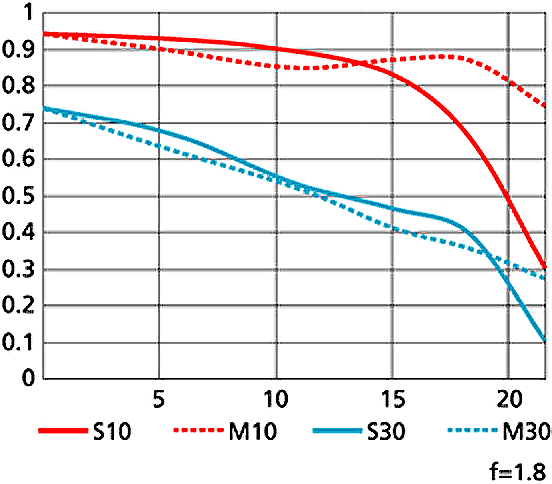 |
| 50mm 1.8G MTF curve |
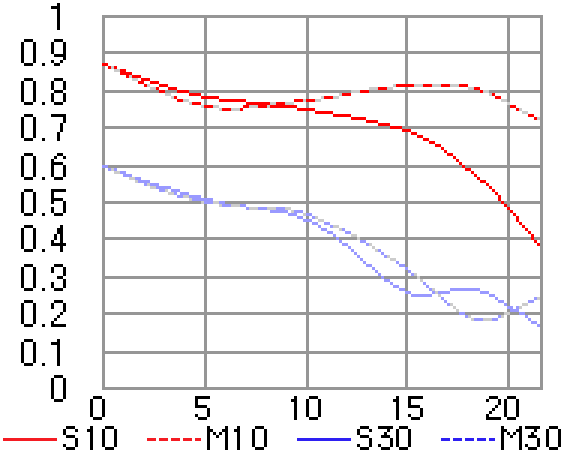 |
| 50mm 1.8D MTF curve |
Wait or just forget it?
I'm not sure how much the actual lens is, or whether it's actually sharper and more contrasty. If not, I rather go for the 1.8D unless the price is reasonably cheap - just like the 50 1.8D. As Ken Rockwell said, "My only reservation, other than all the plastic, is that when Nikon did this same update to the f/1.4 lens, the distortion actually got worse than the older lenses!"
Saturday, April 2, 2011
Nikon D3100 vs D90
Nikon's latest camera, D3100 seems to be quite a performer especially due to the Nikon's latest EXPEED 2. Nikon's (almost)discontinued prosumer DSLR. The D90 won the TIPA European Photo & Imaging Award, in the "Best D-SLR Advanced" category back in May 2009. New doesn't necessarily mean it's better just like Canon's 600D compared to its predecessor the 550D.
1) Image quality/Resolution
Other than the new image processor, Nikon also added a brand new 14.2 megapixel sensor into the D3100. As exciting as it seems, you actually only get 2.1 megapixels more than the D90. Does it really help? Not necessarily. Nikon should've added something like an 18 megapixel sensor to compete with Canon. Winner: D3100
2) ISO Performance
This is where the D3100 truly shines. At ISO 100 till 800, results are almost the same. But when it reaches the 3,200 point, things start to get a bit noisier on the D90. Thanks to the EXPEED 2 processor the D3100 is able to get clean images all the way until ISO 6,400. Artoftheimage was really helpful to post an ISO performance comparison. Winner: D3100
3) Burst rate
Even though the D3100 is a newer camera, its still at the lower end and so Nikon just left the burst rate the same as the D3000's - 3 frames per second. The Nikon D90 has a burst rate of 4.5 frames per second. If you're looking for serious action shots, just skip this and look at the D7000 or D300S. Winner: D90
4) Lens compatibility
Both of these cameras are able to use all the lenses from Nikon. The D90 gets the slight edge here; it's able to autofocus AF-D and AF lenses whiles the D3100 can't. If you want a lens to autofocus on the D3100, you ought to be looking for an AF-S lens because it lacks an autofocus motor. However, both lenses aren't able to meter AI and AI-S lenses. Winner: D90
5) Video mode
Again, its no doubt that the D3100 has better video capabilities here. It features 1080p full HD movie recording. WOW. The D90 only does 720p movie recording(not full HD). Unfortunately, both are still limited to only 24 frames per second in HD mode. The D3100 has another trick under its sleeves; it autofocuses in video. The D90 can't. However, this autofocus feature in video mode is still pretty new and isn't really that reliable at times. Winner: D3100
6) Flash?
Both cameras support all external speedlights from Nikon. The D90 has the slight edge here because it supports Nikon's CLS or Creative Lighting System; a very easy-to-set-up-and-use wireless flash system. So, that means the D90 is able to exploit this advantage without buying any extra accessories. For the D3100, you have to buy a pocket wizard to have this feature. Winner: D90
7) Ergonomics
Its a no-brainer. The D90 has better ergonomics for sure. The grip just feels great. Its beefier, more comfortable and makes pressing the shutter a pleasure. The D3100 is OK, its meant for smaller hands. That's all I could say. Winner: D90
Conclusion
The D3100 is an awesome camera for any beginner. As long as you use an AF-S lens, you should be okay. In a long run, buying the D90 is a better investment. Using AF-D lenses is a cheaper alternative to AF-S lenses. The 50mm 1.8D(without autofocus motor) is just currently at RM400+ whereas the 50mm 1.4G(with autofocus motor) costs about RM1,700. It's more than 4 times more! Get a D90 if you're a true photographer and don't really care about Full HD movie recording. Get a D3100 if you're leaning more towards the movie side.
 |
| D3100 VS D90 |
1) Image quality/Resolution
Other than the new image processor, Nikon also added a brand new 14.2 megapixel sensor into the D3100. As exciting as it seems, you actually only get 2.1 megapixels more than the D90. Does it really help? Not necessarily. Nikon should've added something like an 18 megapixel sensor to compete with Canon. Winner: D3100
2) ISO Performance
This is where the D3100 truly shines. At ISO 100 till 800, results are almost the same. But when it reaches the 3,200 point, things start to get a bit noisier on the D90. Thanks to the EXPEED 2 processor the D3100 is able to get clean images all the way until ISO 6,400. Artoftheimage was really helpful to post an ISO performance comparison. Winner: D3100
3) Burst rate
Even though the D3100 is a newer camera, its still at the lower end and so Nikon just left the burst rate the same as the D3000's - 3 frames per second. The Nikon D90 has a burst rate of 4.5 frames per second. If you're looking for serious action shots, just skip this and look at the D7000 or D300S. Winner: D90
4) Lens compatibility
Both of these cameras are able to use all the lenses from Nikon. The D90 gets the slight edge here; it's able to autofocus AF-D and AF lenses whiles the D3100 can't. If you want a lens to autofocus on the D3100, you ought to be looking for an AF-S lens because it lacks an autofocus motor. However, both lenses aren't able to meter AI and AI-S lenses. Winner: D90
5) Video mode
Again, its no doubt that the D3100 has better video capabilities here. It features 1080p full HD movie recording. WOW. The D90 only does 720p movie recording(not full HD). Unfortunately, both are still limited to only 24 frames per second in HD mode. The D3100 has another trick under its sleeves; it autofocuses in video. The D90 can't. However, this autofocus feature in video mode is still pretty new and isn't really that reliable at times. Winner: D3100
6) Flash?
Both cameras support all external speedlights from Nikon. The D90 has the slight edge here because it supports Nikon's CLS or Creative Lighting System; a very easy-to-set-up-and-use wireless flash system. So, that means the D90 is able to exploit this advantage without buying any extra accessories. For the D3100, you have to buy a pocket wizard to have this feature. Winner: D90
7) Ergonomics
Its a no-brainer. The D90 has better ergonomics for sure. The grip just feels great. Its beefier, more comfortable and makes pressing the shutter a pleasure. The D3100 is OK, its meant for smaller hands. That's all I could say. Winner: D90
Conclusion
The D3100 is an awesome camera for any beginner. As long as you use an AF-S lens, you should be okay. In a long run, buying the D90 is a better investment. Using AF-D lenses is a cheaper alternative to AF-S lenses. The 50mm 1.8D(without autofocus motor) is just currently at RM400+ whereas the 50mm 1.4G(with autofocus motor) costs about RM1,700. It's more than 4 times more! Get a D90 if you're a true photographer and don't really care about Full HD movie recording. Get a D3100 if you're leaning more towards the movie side.
Wednesday, March 30, 2011
What a Pro would do
1) Use as few lenses as possible
A pro will use only the important ones or what he/she really needs. Planning is a must for pros as it determines what lens they'll use. Portraits? An 85mm or 105mm. Macro? A 180mm perhaps. Or wedding photography? 35mm and 50mm.
2) Plan ahead
How do you think pros get to their work place so fast? Well duh, they plan - in advance. If they're shooting for an event, they usually do their research like the venue, the best way getting to the place, the time and so on. The whole point of doing this is to ensure that you get those 'wow' shots instead of just stoning at a corner wondering.
3) Stay focussed and sharp
Because you're a pro, people expect you to take pictures and do your job instead of slacking and stoning. Being blur in an event is an obvious no-no. Maybe for an enthusiast but not for a pro.
4) Show your 'pro' skill
Well, this is more of a should than a would. But anyway, since you're a pro why not show your skill? Not show off, dude. Post your shots on sites like Flickr perhaps and people might just praise you if they are good shots.
5) He/She is always out of the box
Pros generally should think out of the box. That's how they get shots that stand out from the others. If one is able to change the composition as well as the lighting, I think that would make a great image that stands out from others. Since everyone has creativity, its a matter of how creative you are.
Conclusion
Obviously a beginner can't be a pro immediately once he takes a camera and starts shooting. You need experience, dude. And time can only be one's friend in becoming a pro. Start by taking shots from a different angle and focus more on composition and lighting. Photography is all about creativity. Its just a matter of how creative one is.
Monday, March 28, 2011
Product Photography: Without External Speedlights/Strobes
Product photography might just be the most expensive genre of photography mainly because you have to spend a lot on external accessories like speedlights or strobes and the list keeps on going. Go to Sharpics.com - they sell a whole variety of equipment just for product photography.
In this post, I'll be showing you guys how to do product photography on a (serious)budget. And what you need for this is:


In this post, I'll be showing you guys how to do product photography on a (serious)budget. And what you need for this is:
- A camera(it's better if it's a DSLR, but a manual point and shoot camera will just be fine)
- A tripod that holds your camera steady while you're taking your shot.
- A place with plenty of natural light.
- A plain background(doesn't necessarily have to be white) like a table, cloth, or anything you can find in your household.
Once you have all these stuff; you're ready to start:
- First, turn your camera to M(Manual Mode) on your mode dial.
- Turn on your built in flash.
- Turn down the flash compensation to about 2-3 stops.
- Go into your menu > switch from iTTL flash to Manual > set 1/32(on my D5000, that's the fastest but if your camera supports a faster flash speed, use that instead)
- Your fastest shutter speed should not be higher than 1/8 of a second(yes, it's pretty slow)
- Mount your camera onto a tripod(make sure its secure!)
- Place your product on a surface(a cloth over a table is recommended)
- Start your product shots :)
If you do follow the steps I've just said, you should be able to get nice exposed shots. The trick is, the slower the shutter speed the better the image will be. Why? Simple. The faster the shutter speed, the more light from the flash is going to captured in that image. As I said before, if you're going on a budget like me, you should consider this 'method'.
Drawbacks:
- You might need a tripod.
- You need a rather slow shutter speed(the fastest shouldn't be higher than 1/8 second)
- Its a trial and error thing, no one setting is always perfect.
- You can't use a long zoom as it will cast a shadow in your shot.
Sample shots:


Wednesday, March 23, 2011
What makes a 'pro photographer' a 'pro'?
Yes, yes. People just simply say something that really annoys me some times - Hey look! There's a pro photographer there with his DSLR! Are you really a pro with the gear you have or is it the skill that counts? Go to YouTube, and you'll find a whole lot of users buying pro gear, but some how or rather they aren't pros. I find it a bit odd. Things aren't were they supposed to be. But to me, I feel pros are those who have skill.
One who is able to shoot with two primes or so, and still get amazing pictures - that's what I call a pro. To me, the more gear you have, the more 'incompetent' you are. Don't get me wrong; there are called pro gear for a reason. And buying more and more lenses isn't going to help, either.
To me, a 35mm and a 85/105mm is enough for any photographer to shoot almost anything. The 35 can handle wide angle and street or candid photography whilst the 85/105 will just handle everything else; macro, telephoto and portrait photography.
Monday, March 14, 2011
Canon 600D: Is it worth it?
600D is one of the budget DSLRs that has just been announced by Canon. It looks exactly the same. It performs exactly the same. And, it feels exactly the same. And the price ain't cheap - Canon says the price is around RM2,500. Its not that much more expensive than the Canon 550D which is also another great alternative for beginners.
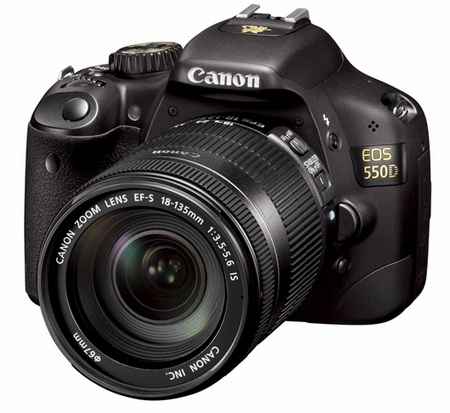 |
| Canon 550D - ignore those gold trims, they're originally white |
 |
| Canon 600D - not much different to the 550D |
Seeing the specs sheets, there really isn't that much difference between the 550D and its successor, the 600D.
Similarities
- 18 megapixel CMOS sensor
- DiGiC 4 processor
- ISO range of 100-6,400(expendable to 12,800)
- Burst rate of 3.7 frames per second
- Supports SD, SDHC, SDXC format cards
- Full HD 1080p movie recording
Differences
- Minor movie recording tweaks
- Tilt-and-swivel screen
Final impressions...
The 600D is like a baby 60D copying most of its features. Canon's moving to the video camera side, focusing more on video but also providing that awesome 18 megapixel shooting experience.
Would I buy it?
No. I'd save up for lenses and other accessories. HD recording is a nice feature to have. But seeing that I'm a photographer and not a videographer, I wouldn't want to buy a camera which I won't use. The 550D has proved to be a remarkable budget DSLR. As for the 600D, it might be a worthy successor. I see no reason why current 550D users should upgrade unless they really want those video tweaks Canon just added.
Saturday, March 12, 2011
How to choose cases for your phone
If you have an iPhone, iPod, or any other phone, you might want to consider getting a case to protect your device. However, do keep in mind there are a few things to consider when you're out choosing your case.
1) Matte over glossiness
Most of the cases these days(especially those China branded ones) are quite glossy. Cases like these will make your case very scratch-friendly. You wouldn't like your brand new iPhone in a cheapo case that looks like crap, right? When you're out case hunting, just look around for matte cases. You'll appreciate the matte case much, much more than those glossy ones. And matte cases, usually look better!
2) Don't be penny wise, pound foolish please
A lot of people that I know, have this mentality. Look, investing in a proper case will be much better than those 'cha-pa-lang' cases, trust me. I've been there and done that. The last thing you want is a case that just gives way because of the crappy material that they use.
3) Make sure all your buttons work properly
If you're thinking the case will spoil your phone's buttons, then that's not what I meant. Cheap cases(China branded ones), usually have this problem of the ports or buttons slots not being cut properly. Yes, most of these cases might not fit your phone properly. So bear in mind, if you're buying those cheap cases.
4) Go to a retail store/seller
Yes, this is the number one thing I'll ask anyone to do(even my mom or dad) when they're considering to buy a case. Go to a retail store. There will be loads of cases to choose from. There's a shop called MacWorld or something similar in One Utama. I definitely recommend that shop because of the vast variety of cases one can discover. They have two shelves filled with Apple accessories for crying out loud! As fussy as you might be, you're still bound to find a case that suits you. Check this link for more info: Apple's Retail Distributors
Other tips from me...
Okay, many salesmen, usually just promote their products or say things that aren't true. Silicone cases, are usually very bad in quality. I'm usually scared when there are slots, 'cause these might just give way causing your iPod or iPhone to drop out of the case(a few cases like these happened). The average price of a case is usually around RM60-RM80+ for an iPod or iPhone. All the best.
Why I chose Nikon
I chose Nikon. And I'm proud to say that. Some chose Canon. Others chose Sony. Its all down to personal preference. We can't all go around discriminating other brands. But heck, I do it :P Anyway, going back to the topic. There are very good reasons why I became a Nikon-ian instead of a Canon-ian(sounds weird) or a Sony-ian.
1) It can practically see in the dark
Nikon DSLRs are just magnificent. They can literally see in the dark. Compared to Canon's or Sony's, the ISO performance on Nikon's are god-like. I usually shoot at ISO 800, but if I'm forced to(since I don't have an external flash and a fast prime at the current moment) shoot at high ISO's, I will. Of course, ISO 6400 will give you very noisy results but its better than Canon's ISO 6,400. Most of my night candids are shot at ISO 3,200 max.
2) Ergonomics master
Pretty gay way of saying it. To me, Nikon's are just perfect when it comes to ergonomics. Especially the higher end models, like the D7000, D300s, D700, etc. Their grip is just perfect. Should you use a pro lens like the 24-70mm f2.8 things just gets better and better. One of the main reasons why Nikon gets my vote when it comes to ergonomics is that they placed the thumb dial at the back of the camera opposed to the oddly-placed finger dial at the top of the camera. This makes one handed operations much easier on Nikon DSLRs. Buttons are placed more sensibly on the Nikon. Canon's previous layout was OK, but they've changed them to a more, weird layout(look at Canon's latest lineup of DSLRs).
3) Brilliant wireless flash system
Nikon uses this wireless flash system called Creative Lighting System(CLS). Not sure about Canon's wireless flash system, but heard that there were problems or it was just too sophisticated for rookies. For Nikon, its quite simple. First, make sure your camera and flash supports this feature - D70, D70S, D80, D90, D7000, D200, D300, D300s, D700, D3, D3x, D3s and SB600, SB700, SB800, and SB900. The D3000, D3100, D5000 and SB400 won't support this feature, sorry guys ):
4) Sharp lenses
Yes, Nikon does have a few sharp glasses. I was actually surprised by how sharp it was at the price you were paying for. The 18-55mm VR is a good example. As a kit lens for the cheaper bodies, it costs only RM400+. However, in terms of sharpness, it rules. We're not talking about build quality, or the smoothness of the bokeh here. One of the main reasons why I hate it, is because of its autofocus speed. Its so slow, it struggles to focus on my brother when he rides on his bike(yes, its very slow). I do get him focussed in shots, but rarely.
5) Compatible with lenses since 1959
Call me a Nikon fanboy, but Canon only supports lenses till 1985 - the great divide. That's when Canon decided to flush their previous system and all the lenses before it. That's when they came up with EOS(Electro-Optical System). And because Nikon didn't flush their system like what Canon did, we Nikon users get to choose from a wide variety of lenses. But do note that lenses at that time are manual focus(meaning you have to focus yourself) and you need a camera that is able to meter these lenses. The D200, D300, D700, D3, D3x, D3s will meter these lenses.
Now you have 5 more reasons why you should shoot Nikon (:
Friday, March 11, 2011
How to make your lens SHARPER
Sharpness. Yes, all everyone cares about is sharpness. And its one of the gimmicks camera manufacturers usually use against us innocent consumers. 'Softness' is a term that basically means that it isn't sharp. Usually, lenses will have this softness at different focal lengths. Depending on the lens, different lenses will have different amount of softness. Even huge, large, heavy pro lenses still do have softness like the Nikkor 24-70mm f2.8.
But, if you do know how to use a lens, a cheap RM300+ lens might be sharper than that pro lens you're dreaming about. It all depends on whether you know how to use your lens or not. If you're given the 24-70mm f2.8 and if you don't know how to use it, softness still might appear.
Okay, cut to the chase. How do you sharpen your lens??
Simple. It should work for all lenses. Cheap, old, expensive, you get the point. Anyway, its quite simple. Simply, stop your lens down to two stops. Depending on what aperture your lens has, it's usually in the f7.1/f8 zone unless you're buying fast zooms or primes with apertures at f1.4 - f2.8. Check your manual for further reference.
Should you buy a sharp lens?
Well, its hard to decide. I don't do lab tests. And my tests are usually not-so-scientific tests. But what I can say is, it does help. But should you buy an expensive lens over a cheap lens that has almost the same optics? Not necessarily. You're most probably paying for the better build quality, bokeh, less distortion, etc.
Wednesday, March 2, 2011
Nikon's 5 must have lenses
From hundreds of lenses, only a couple will shine. That's what this post is about. Here, I'll rate the lenses in a few aspects - pricing, image quality, chromatic abberation and lastly bokeh.
1) Nikkor 18-200mm VR(Versatility)
Yes, the superzoom is in my list. From wide angle to telephoto with just a twist, it just changes everything. The versatility that this lens offers will just astound you. If I were to photograph events, I'd take this and the Nikkor 50mm f1.8D. It'll cover everything you need to shoot.
Saturday, February 26, 2011
Avast 6.0 Review
What's up guys? The long awaited Avast 6.0 is out! Yes, I'm not kidding. It's out. And along with this new antivirus, there were a couple of features that the Free version inherited from the Pro version(paid version).
Interface
Avast 5.0 had the best interface and so did Avast 6.0. There are some tweaks here and there for the new features. But, any Avast 5.0 user will easily be able to access it. I'm actually happy that Avast did this because their previous version, 4.8 had a very, very bad interface. Everything didn't make sense.
Virus definitions?
No changes here, Avast didn't report anything about a new virus engine.
Wednesday, February 23, 2011
Should you buy third party gear
Third party gear/accessories have been quite popular recently. I think its a must have for beginners, since they're new to photography and they just want something cheap and practical. Pros use these too, but seldomly. Don't get me wrong, third party brands are there for a reason - to provide a cheaper alternative than the already expensively-priced manufacturer's lenses. Take the Tamron 70-200mm f2.8 for an example. I'll compare it to Nikon's equivalent Nikkor 70-200mm f2.8. In terms of price, the Tamron is definitely cheaper which makes it a no-brainer. The Tammy(a nickname for Tamron's lenses) is priced around RM2,800 whereas the Nikon is priced at RM8,200. Yes, the numbers don't lie. The Tammy is about cheaper than the Nikon. Quality-wise, they're practically almost the same. Better yet, Tamron is said to be sharper than Nikon and its labelled Macro which allows it to get up close to get macro shots(not 1:1 reproduction ratio, sadly).
Saturday, February 19, 2011
Free VS Paid Antivirus
Security for your computer, is a must have for you right? Good, you got the first part right. Is paying for that antivirus worth it? Let's see why, its not worth paying for something, you aren't getting.
Is it more secure?
You're paying for this antivirus, that you think is more secure. Perhaps, it has a better virus scanner? Well, sorry to dampen your spirits, but you're wrong. You're actually getting the same, as the free version. Forget AVG. They're completely the same as the free ones, in my opinion.
So why pay?
You're actually paying for features, more than safety. Kaspersky, Norton and all those companies that advertise, all you get from paying is the Sandbox Feature. You can even get this Sandbox Feature for free. Google Sandboxie, it's a non-profit software that does those sandboxing features that make paid antiviruses so much more special. Other than that, I don't see it being any different from the free ones.
Tuesday, February 15, 2011
How to choose your laptop/notebook/netbook
Choosing your laptop/netbook is a very time consuming thing. You wouldn't want to waste your hard earned cash, right? Follow this guide and you might save your hard earned cash.
Be sure of what you want
This is probably the most obvious thing, is to make sure what you want? Are you for complete mobility? If you are, then get a netbook or a 13" laptop. But be sure that you're getting a slower processor and limited RAM. Usually, people who get netbooks only wish to surf the Internet, do their Facebooking and chatting. 'Cause that's what its made for.
Or maybe you're for everyday computing? Its more powerful than a netbook. I have one, and it pretty does what I want it to do. Since I'm not a hardcore gamer, this will do for me. And I do photo editing too. It does get a bit sluggish some times, but its a cheaper alternative than another type of laptop which I'm gonna talk about later.
Sunday, February 13, 2011
To use or not to: Conversion Lenses/Filters
Money ain't something everyone has. Let's face it. Photography is an expensive hobby. A very expensive one. Be ready to invest, if you're looking for lenses. 'Cause not all lenses are cheap, some are priced sky-high. If you shoot Nikon, you should've known this lens - Nikon 600mm f/4G. If you haven't, that's the lens on the left). Yeah, the price stated isn't fake. If I'm not mistaken, its the most expensive lens Nikon has made. Malaysia's market price for this lens is around RM31,950. Yes people, you can buy a Proton instead!
Anyway, this post isn't about that lens. Filters, have been around for quite some time. And filters are useful. I have two, a Polarizer filter and a UV filter. And they're both very helpful. But have you heard of a different type of filter? Yes, it still screws at the end of your lens. These different type of filters are usually called conversion lenses. They convert your lens into a different type of lens. Its like this: I have a 60mm and I use a 0.45x wide angle conversion lens. I'll get a 27mm lens(60mm x 0.45). You save thousands and thousands of cash if you'd just buy filters instead of actual lenses. There are fisheye, and telephoto conversion lenses too. They work the same way, screw the filter in front of the lens, and you're done. To find what focal length you're gonna get, just multiply the filter's (number)x with your current lens' focal length.
Anyway, this post isn't about that lens. Filters, have been around for quite some time. And filters are useful. I have two, a Polarizer filter and a UV filter. And they're both very helpful. But have you heard of a different type of filter? Yes, it still screws at the end of your lens. These different type of filters are usually called conversion lenses. They convert your lens into a different type of lens. Its like this: I have a 60mm and I use a 0.45x wide angle conversion lens. I'll get a 27mm lens(60mm x 0.45). You save thousands and thousands of cash if you'd just buy filters instead of actual lenses. There are fisheye, and telephoto conversion lenses too. They work the same way, screw the filter in front of the lens, and you're done. To find what focal length you're gonna get, just multiply the filter's (number)x with your current lens' focal length.
Saturday, February 12, 2011
How to choose your tripod
Night as well as landscape photographers require a lot of stability to get that perfect shot. Buying an expensive camera system and buying a cheapo tripod isn't going to work. First off, cheapo tripods tend to be weaker. It won't withstand a lot of weight and therefore might not exactly keep your camera steady. Looking for a tripod can easily be as time consuming as choosing your camera system. Tripods are divided into two main parts, the head and the legs of the tripod. Just like your camera, doing research isn't IS a must as it can determine what you're going to buy. Companies to recommend? Manfrotto, Benro and Bogen(currently owned by Manfrotto) are known for their specialty as tripods and monopods companies.
The first thing you need to do is to check how much weight your tripod is going to bear. Bear in mind that if it can't hold that much weight, the tripod's legs might bend. Usually, it's just the camera body, the lens and the flash gun. A good system like mine would weigh not more than 3 kg. But that's because my system is all compact and lightweight lenses. If you're getting a really long or heavy lens, your tripod will have to withstand around 6-8 kg. And I'm not just talking about the legs of the tripod, even the head has should withstand the weight. If its too heavy for the head, and if you're using a ball head(more on that later) you might have to buy another one to replace it. There are a few types of tripods to choose from(depending what type of camera you're using). If you're using a compact, then a pocket-sized tripod will do the job. If you're using a DSLR, then you have to find a medium sized tripod or a heavy duty tripod depending on what you shoot.
Subscribe to:
Posts (Atom)